Helena Huang 黄晴
Madison, WI · Human–Computer Interaction
About
Hi/嗨! I’m Helena (she/her), an Undergraduate & Human–Computer Interaction Researcher at UW–Madison, advised by Professor Kris Sankaran, Professor Yukang Yan, and Professor Yuhang Zhao, and previously worked with Professor Gary Shiu.
 ,
,I critically study and design interactions with AI and AR to explore how computational tools can foster more reciprocal partnerships between people and machines, as well as how they relate to the real-world contexts they inhabit. Recently, I’ve been exploring these questions primarily in accessibility, creativity support, and sensemaking, with broader interests in the politics of design and human–robot interaction. Ultimately, my goal is to develop practical design principles and expand theories of interaction through system building and rigorous empirical studies, to envision a more empowering, liberatory, and embodied computing future.
I’m Hakka I’m Hakka, with ancestral roots in Jiangxia (江夏郡), now part of Hubei. My ancestors migrated south about a thousand years ago, and my family has kept records of our history for generations. I feel deeply connected to this heritage, especially the history and culture of Chu (楚). I also love the mountains and land, which sheltered my ancestors from war and gave them a peaceful home, and the soil and water that have supported us for generations., born and raised in Meizhou, China, where I grew to appreciate grassroots knowledge and the resilience of communities. Before transferring to UW–Madison, I spent two years in Ningbo studying Environmental Science When I first started college, I thought that knowing the names and histories of every species in the world (Homo sapiens included) was the coolest thing ever. Some of my friends started a natural history blog on WeChat called 自然青年, where we wrote about different species and environmental topics. They definitely did most of the writing, though. with research around Martian geomorphology.
Outside of research, you’ll find me writing historical fantasy inspired by history and supernatural tales, reading Chinese classics, taking photos,
sewing
I love traditional clothing, especially Hanfu (汉服). I’ve been studying and promoting it since primary school and have organized cultural events featured in local newspapers.,
gardening
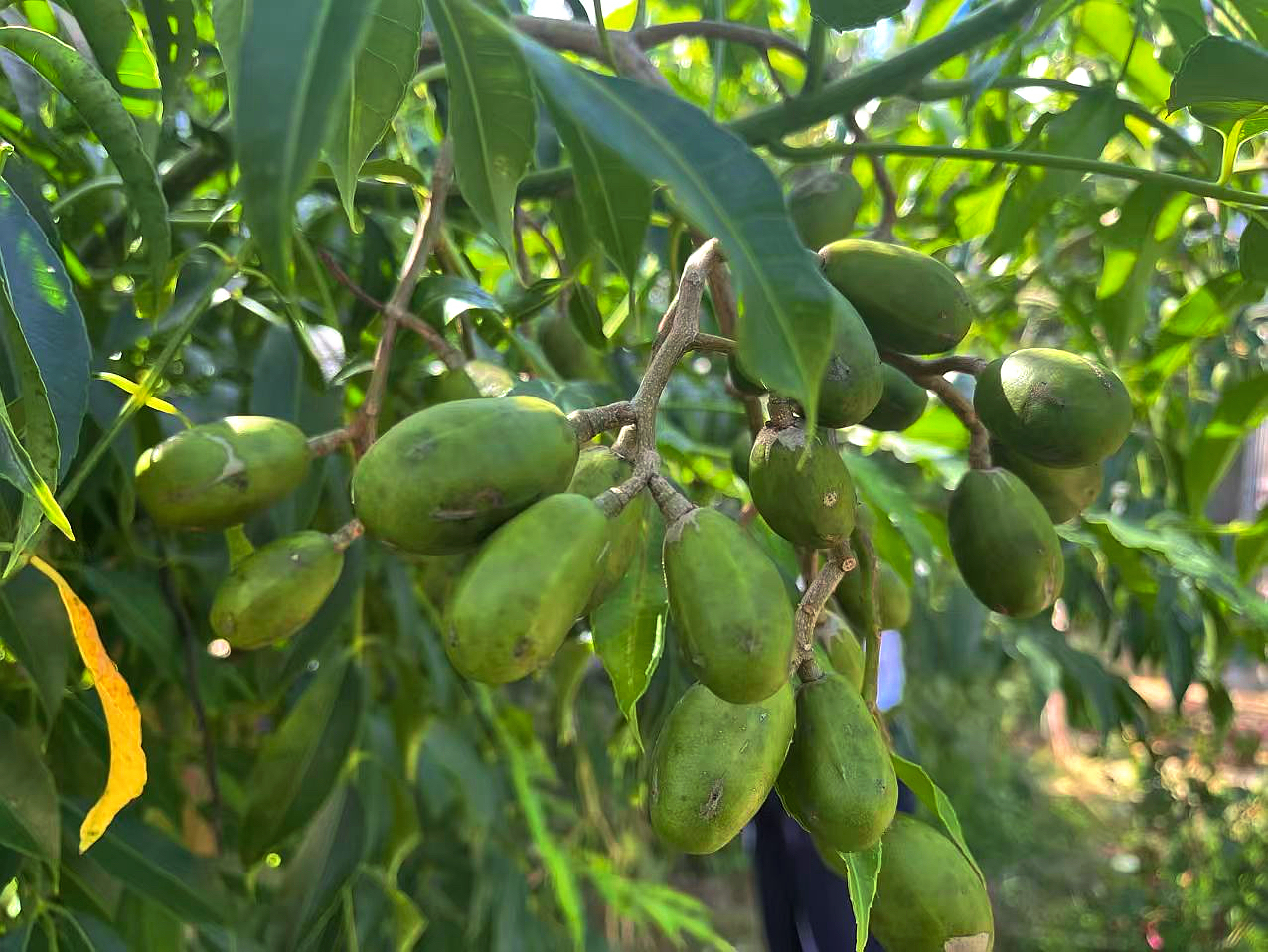 I spent two years studying Environmental Science. I also led a student gardening group, where we grew vegetables and flowers in the campus garden.
Gardening has always been a big part of my family, especially for my mom. This is an olive tree she planted., visiting
historical sites
I spent two years studying Environmental Science. I also led a student gardening group, where we grew vegetables and flowers in the campus garden.
Gardening has always been a big part of my family, especially for my mom. This is an olive tree she planted., visiting
historical sites
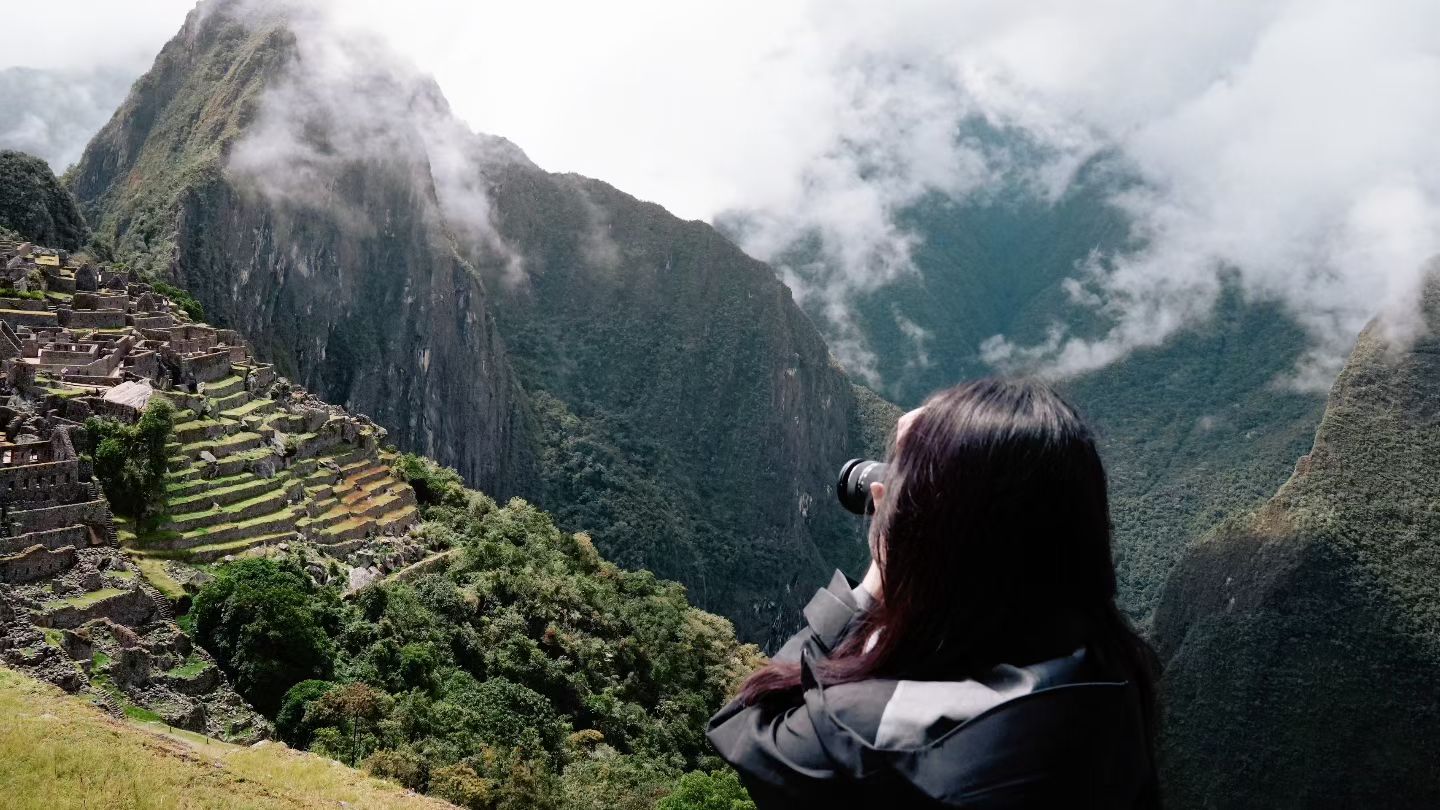 My most recent trip is to Machu Picchu, Peru!, making fandom artifacts (collages, videos, fanfiction...), playing visual novels, and trying my very best to put feminism into practice.
Looking for HCI Ph.D. opportunities (Fall 2027) and research positions or internships (Spring 2027)
qhuang239 [at] wisc [dot] edu
Updates
- Serving as a student volunteer at IEEE VIS 2026 in Boston, where I’ll also present a poster on how people perceive different dimensionality-reduction visualizations.
- Demoing FlowNote at UIST 2026 in Detroit.
- Wrapped up my visit to the BEAR Lab at the University of Rochester and returned to Madison. Many thanks to Yukang for hosting me!
- Led a Feminism Reading Seminars discussion, hosted by Runhua, on women players reimagining gender representation in Chinese video games.
- Helped demo A11yBits toolkit + A11yMaker AI by Kosa et al. in the AI-Assisted Vision Workshop on Intelligent Assistive Technologies for Blind and Low Vision Individuals. Details: UW–Madison Leads Collaborative Effort to Advance Artificial Intelligence for Low Vision.
- I’m honored to receive the UW–Madison Hilldale Undergraduate/Faculty Research Fellowship for my project on topology-aware graph neural networks for cosmological simulations with Professor Gary Shiu and Jacky Yip. I’m grateful for their support and mentorship!

Research
-
Do Better Embeddings Lead to Better Judgments? A User Study of PCA and UMAP for Single-Cell Data
· pdf
Dimensionality-reduction visualizations are essential to modern biology, but the same data can yield different embeddings depending on algorithm and hyperparameter choices. Whether these choices influence analyst conclusions, and whether more faithful embeddings yield better conclusions, is unknown. We ran an exploratory within-subject study with 12 participants comparing PCA, UMAP set to default hyperparameters, and a tuned version of UMAP across clustering and trajectory tasks grounded in single-cell analysis workflows. Both UMAP conditions produced higher accuracy and confidence than PCA and were strongly preferred, and completion time did not differ significantly. However, tuning did not improve accuracy over default UMAP and higher confidence did not correspond to higher accuracy. These findings suggest that computational embedding fidelity and perceptual usefulness are related but distinct.
-
FlowNote: Making Bodily Experiences Visible in Music Production
· video
Creative work is deeply embodied, yet creative histories captured by most tools largely center on changes to external artifacts, leaving bodily experience difficult to revisit. We present FlowNote, a system that augments digital music-production histories with physiological data to support retrospective reflection. FlowNote synchronizes FL Studio interaction events, workspace recordings, and physiological signals captured by EmotiBit, then clusters intervals with similar physiological configurations and surfaces repeated occurrences as Pattern Suggestions. Users can inspect these suggestions or select moments themselves, revisit them in context, and annotate them in their own words. Saved annotations remain linked to the underlying session data for cross-session retrieval. FlowNote explores how bodily experiences can become part of creative histories while keeping interpretation in the user’s hands.